Reset clinical care — Movement & Rehab
The body is not a collection of parts. Pain rarely starts where it hurts.
Conventional physiotherapy is good at treating the site of pain.
- First consultation
- 60–90 minutes
- Follow-up
- Protocol-based
- Approach
- Root-cause
- Integration
- Full clinical team
The discipline
Physiotherapist
It stretches the tight hamstring, strengthens the weak rotator cuff, mobilises the stiff lumbar segment, and applies the appropriate manual therapy to the presenting joint. For acute presentations, this is precisely what is needed — and it works.
But for the person whose back pain keeps returning. Whose shoulder recovered and then deteriorated again. Whose knees hurt despite no structural finding on the MRI. Whose recovery from surgery is slower than it should be. Whose sports injury has healed but whose performance has not returned.
For that person, the site of pain is rarely the source of the problem.
At our clinic, physiotherapy operates within a longevity and performance framework that treats the whole biological system — not just the structure that is currently reporting the complaint.
What it is
Physiotherapy at our clinic is advanced musculoskeletal and neuromuscular clinical practice — assessment-led, evidence-based, and integrated with the diagnostics and therapeutic modalities of a longevity and biohacking clinic that no conventional physiotherapy practice has access to.
Chronic inflammation. Mitochondrial energy depletion. Hormonal insufficiency. Micronutrient deficiency. Autonomic nervous system dysregulation. These are not physiotherapy diagnoses. But they are physiological realities that determine how fast tissue heals, how well a rehabilitation programme works, how completely function returns, and how long results last.
When your physiotherapist works within the same clinical team as a functional medicine doctor and functional nutritionist — and has access to HBOT, red light therapy, PEMF, cryotherapy, and far infrared sauna — the ceiling on what physiotherapy can achieve rises significantly.
What we assess
Every clinical journey begins with a comprehensive assessment that goes beyond standard musculoskeletal evaluation.
Detailed movement & postural analysis
Identifying not just the presenting dysfunction but the movement patterns, compensations, and biomechanical inefficiencies that created the conditions for it. Pain is often the final signal in a long chain of adaptations. We map the chain.
Neuromuscular assessment
Examining how the nervous system is coordinating movement, where motor control has been disrupted by injury or chronic pain, and what needs to be reintegrated before structural loading will be safe and effective.
Functional capacity evaluation
Assessing the physical demands of your life, sport, or work — and the gap between your current capacity and what is required of you. Rehabilitation that does not close that gap completely will always leave you vulnerable to re-injury.
Integration with advanced diagnostics
Where clinically relevant, your physiotherapy assessment integrates with the clinic's diagnostic capability. Inflammatory markers, hormonal status, nutritional sufficiency, and mitochondrial function all influence tissue healing and recovery. In complex or persistent presentations, understanding these factors changes both the prognosis and the approach.
Our approach
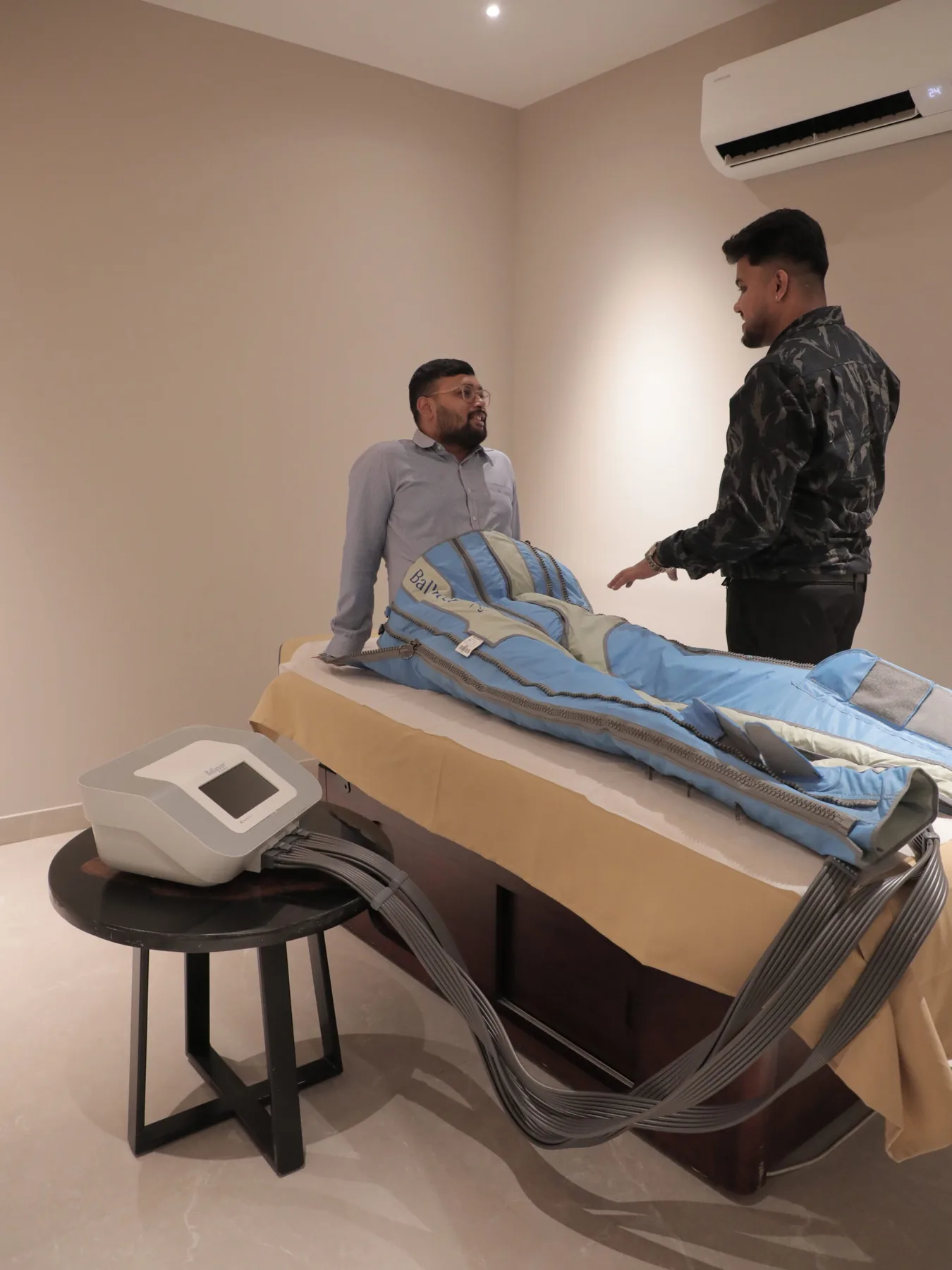
- Manual therapy — Joint mobilisation and manipulation, soft tissue therapy, myofascial release, trigger point work, and neurodynamic techniques. Applied precisely, to the structures and movement restrictions your assessment has identified.
- Cupping, mat pilates, assistive stretching & lymphatic drainage — A complementary suite of hands-on and movement-based modalities: cupping therapy to release fascial restriction and improve local tissue circulation; mat pilates to rebuild core stability, postural control, and functional movement patterns; assisted stretching to restore joint mobility and muscular flexibility under clinical guidance; and manual lymphatic drainage to reduce post-injury or post-surgical swelling, accelerate tissue clearance, and support the body’s natural recovery processes.
- Exercise rehabilitation — Structured, progressive, specific to your assessment findings and functional goals. Not a generic exercise sheet — a clinical programme built around your movement deficits, muscle imbalances, and load tolerances.
- Sports performance rehabilitation — For athletes and active individuals, targeting return to full competitive capacity — not just pain resolution. Including running gait analysis, sport-specific movement screening, and load management programming.
Begin today
Book advanced therapy
Start with a complimentary discovery call. Our clinical team will design the optimal protocol for your biology.
Schedule your consultation WhatsApp usSuitability
Who it is for
Physiotherapy at our clinic is for anyone whose pain, injury, or recovery has not responded fully to conventional treatment — and for those who want the most complete, evidence-based, and biologically supported rehabilitation available.
-
01
People with recurrent or persistent musculoskeletal pain — back, neck, shoulder, hip, knee — whose previous physiotherapy provided temporary relief but not lasting resolution
-
02
Athletes — recreational and competitive — who want sports injury rehabilitation and performance recovery delivered at the standard of professional sport
-
03
Anyone recovering from orthopaedic surgery who wants the fastest, most complete recovery biologically possible — including HBOT and RLT to compress healing timelines
-
04
People with chronic pain conditions — fibromyalgia, chronic fatigue, complex pain — who need a multi-modal approach that goes beyond standard manual therapy
-
05
High-performers and executives whose physical capacity is a professional and personal asset they want to protect and extend
-
06
Anyone on a longevity programme who wants their movement health assessed, optimised, and maintained as a core pillar of their biological age strategy
-
07
People who want to understand why they keep getting injured — and have the biomechanical, neuromuscular, and systemic factors driving that pattern properly assessed and addressed
Integration
Integration with advanced recovery modalities
This is where physiotherapy at our clinic diverges most significantly from conventional practice:
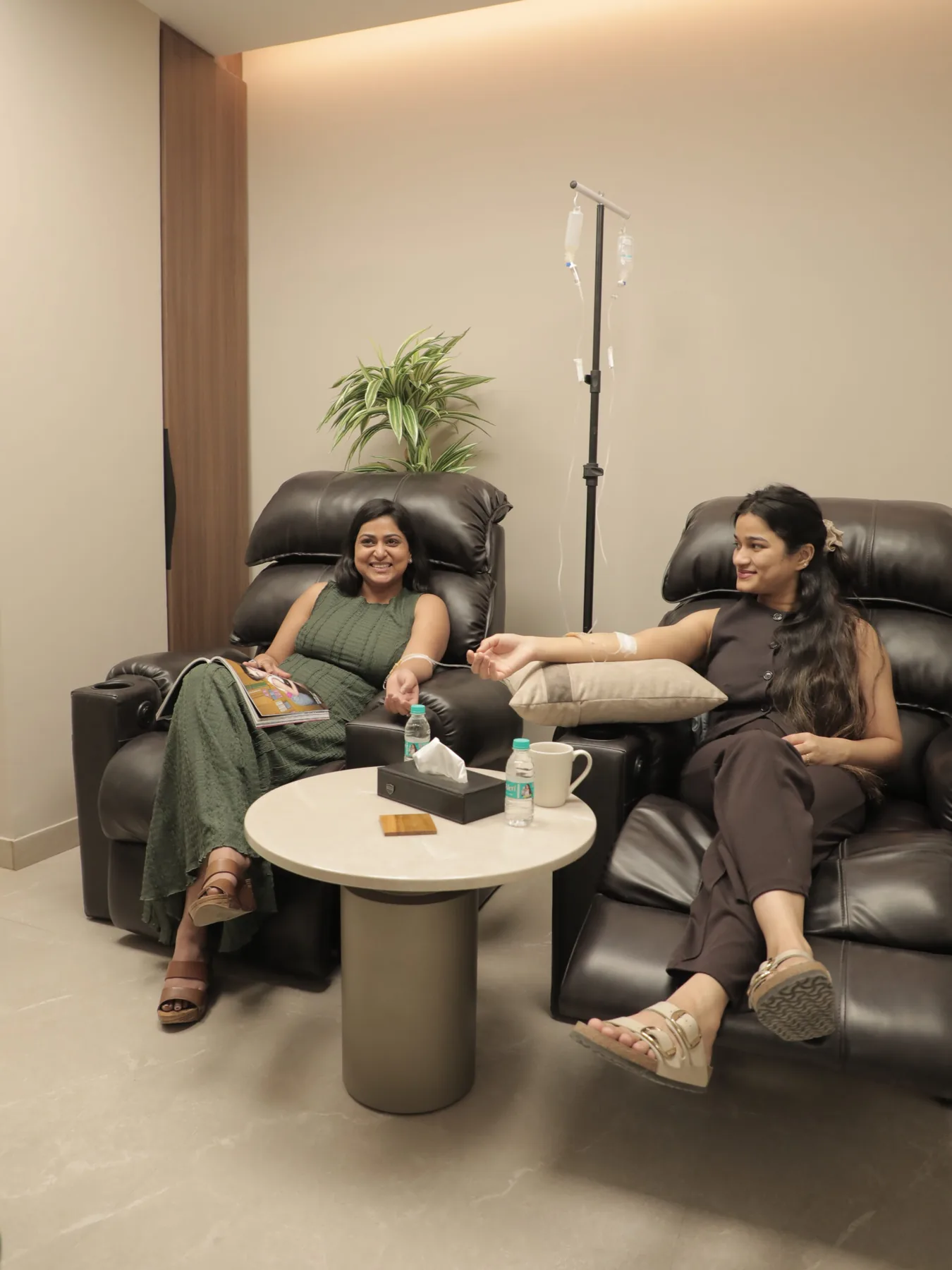
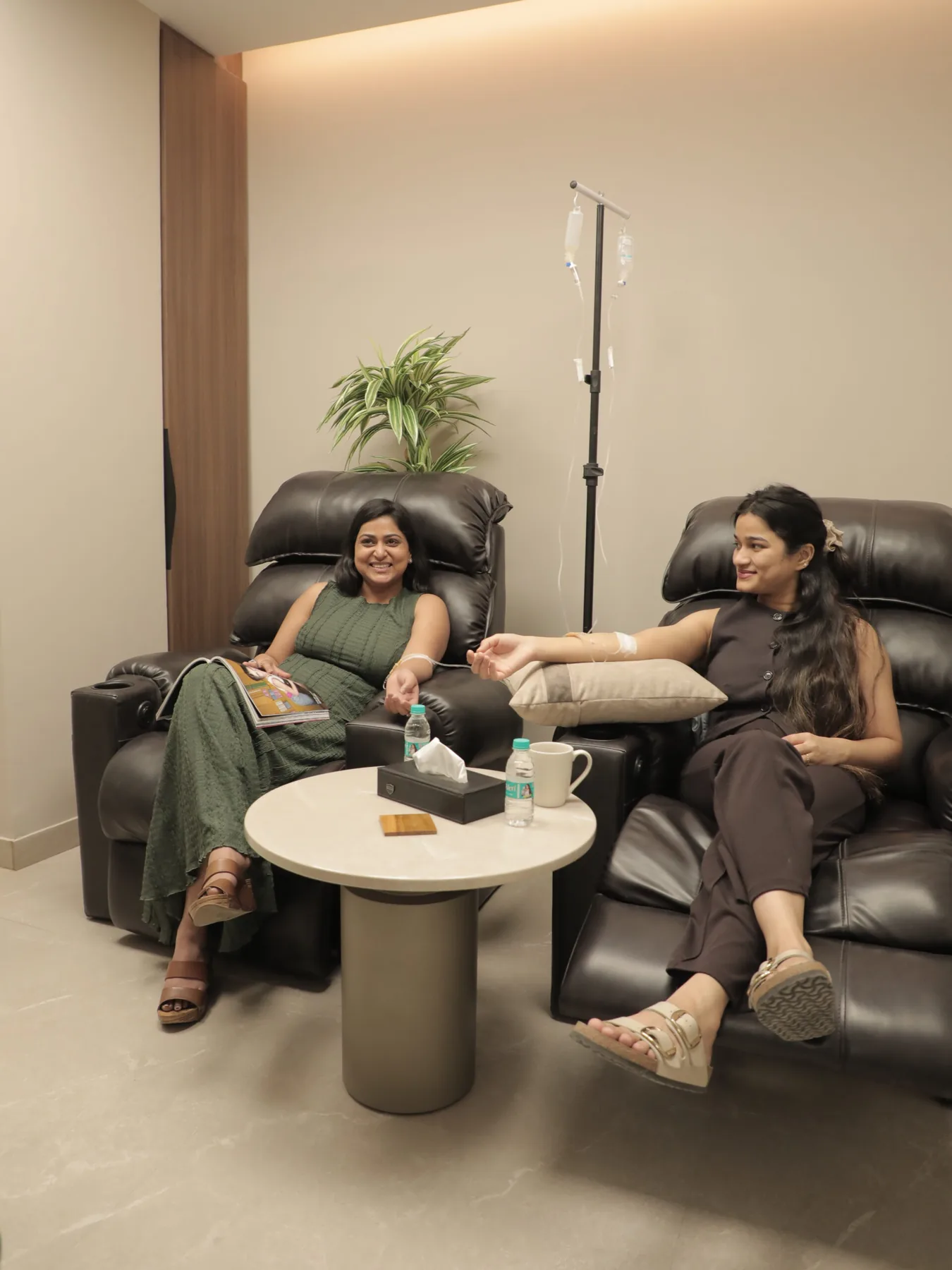
- HBOT (Hyperbaric Oxygen Therapy) — Drives oxygen into hypoxic tissue, accelerating collagen synthesis, reducing post-injury and post-surgical swelling, and significantly compressing recovery timelines. The evidence base for HBOT in musculoskeletal recovery and post-surgical rehabilitation is substantial and growing.
- Red Light Therapy (Photobiomodulation) — Stimulates mitochondrial energy production in injured tissue, reduces inflammatory cytokines, promotes cellular repair, and accelerates tendon, ligament, and muscle healing. Used in professional sports recovery programmes globally.
- PEMF (Pulsed Electromagnetic Field Therapy) — Supports bone healing, reduces chronic pain and inflammation, promotes connective tissue repair, and modulates the nervous system's pain response. Particularly relevant in chronic tendinopathy, delayed fracture healing, and persistent post-surgical recovery.
- Whole Body Cryotherapy (WBC) — Acute systemic reduction in inflammatory load, vasoconstriction and rebound vasodilation to accelerate tissue perfusion, and analgesic neurological effects. Used by elite sports programmes worldwide for recovery acceleration.
- Far Infrared Sauna — Promotes deep tissue circulation, muscle relaxation, and systemic anti-inflammatory response. Particularly relevant in chronic musculoskeletal pain, fibromyalgia, and recovery from high training loads.
- Float Therapy — Profound neurological rest, magnesium absorption, complete offloading of the musculoskeletal system, and parasympathetic activation. For athletes in high training blocks and individuals in chronic pain states, the recovery benefits are measurable.
Physiotherapy that only treats the site of pain is physiotherapy that will see you again in six months with the same complaint. We treat the system that produced the pain — and we use every clinical and technological tool available to ensure it does not come back.
How is this different from a standard physiotherapy clinic?
The clinical assessment and manual therapy expertise is equivalent to any high-quality physiotherapy practice. What is categorically different is the clinical environment it operates within. Our physiotherapist works alongside a functional medicine doctor and functional nutritionist — so systemic factors contributing to your pain or slow recovery can be identified and addressed in parallel. And the access to HBOT, red light therapy, PEMF, cryotherapy, and float therapy means recovery modalities available to elite sports programmes are an integrated part of your rehabilitation plan.
Will I need to do the advanced therapies?
Not necessarily. Many presentations are addressed through manual therapy and exercise rehabilitation alone. However, for post-surgical recovery, chronic pain, sports injury rehabilitation, and complex presentations, the clinical evidence for integrating HBOT, RLT, and PEMF is strong — and we will always present the clinical rationale for any recommendation we make.
Do you work with serious athletes?
Yes. We work with competitive athletes from a range of sports — from weekend warriors to professional and semi-professional competitors. Our approach to sports rehabilitation is return-to-performance, not just return-to-participation. We address biomechanical, neuromuscular, and physiological factors that determine performance alongside structural ones.
Can physiotherapy help with post-surgical recovery?
Yes — and post-surgical rehabilitation is one of the areas where integration with advanced therapies makes the most measurable difference. HBOT has a strong evidence base for accelerating tissue healing, reducing swelling, and promoting collagen synthesis post-surgery. Combined with a structured physiotherapy programme, it can meaningfully compress recovery timelines compared to physiotherapy alone.
I've had physiotherapy before and it didn't last. Why would this be different?
Because if your previous physiotherapy treated only the site of pain without investigating the pattern of movement, the systemic factors, and the underlying drivers of recurrence, the relief was always going to be temporary. Our assessment is designed to find the reason the problem keeps coming back — and the rehabilitation programme is designed to address it at that level.
How many sessions will I need?
This depends on your presentation, your goals, and how your body responds to treatment. Following your initial assessment, your physiotherapist will give you a clinical prognosis and an outline of the recommended programme — including the rationale for any advanced therapy integration. We do not recommend open-ended treatment. Every programme has defined goals, defined timelines, and defined measures of progress.

Begin
Experience Physiotherapy at Reset.
Book a personalised consultation and discover what a more individual approach to wellness could look like — for your body, your goals and your schedule.